

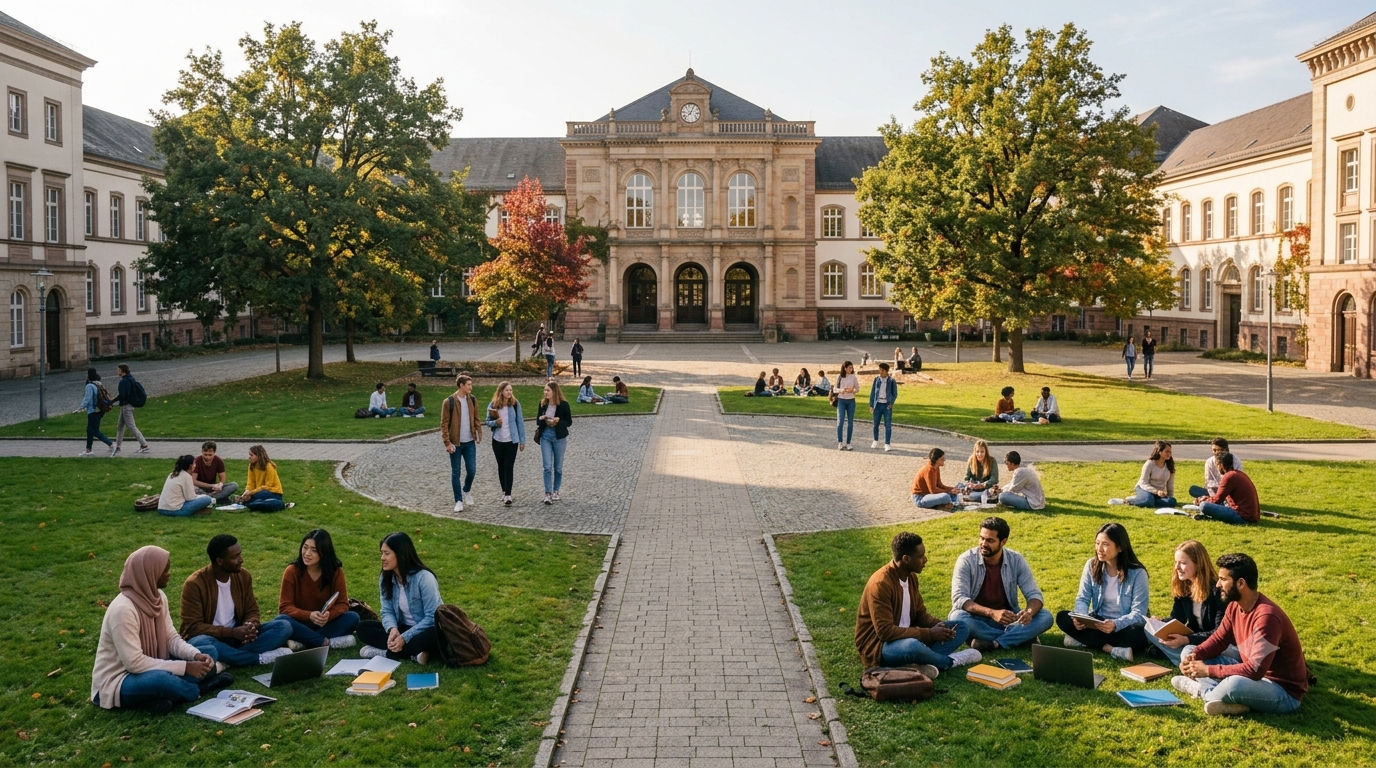

Most Important Points (Key Takeaways)
- State-Funded Education: Most public universities across Germany do not charge tuition fees for international students pursuing Bachelor’s or consecutive Master’s degrees.
- Mandatory Semester Contributions: “Free” tuition still requires a non-tuition semester fee (Semesterbeitrag) ranging between €100 and €400 per term, which usually includes free regional public transportation.public universities with zero tuition for students
- Regional Exceptions Exist: The federal state of Baden-Württemberg charges non-EU international students €1,500 per semester, and select institutions like the Technical University of Munich (TUM) charge program-specific non-EU tuition.
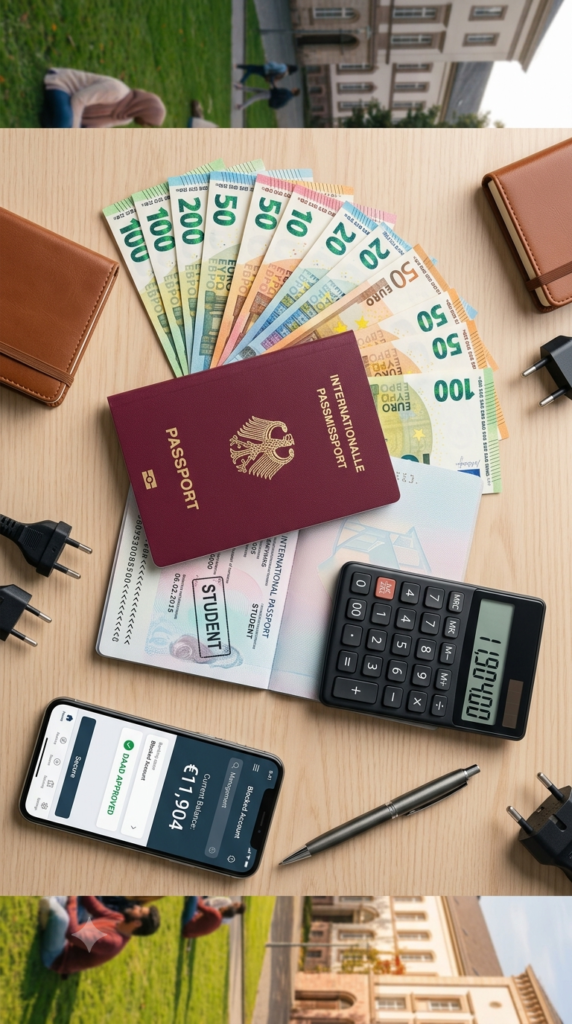
- Proof of Living Funds Required: To secure a German student visa, non-EU applicants must prove financial stability via a German Blocked Account containing €11,904 per year (€992/month).public universities with zero tuition for students
- English-Taught Options: Hundreds of public Master’s degrees and a growing number of Bachelor’s degrees are taught entirely in English without requiring advanced German language skills at the time of entry.
How Germany’s Tuition-Free System Works
The fundamental principle behind The fundamental principle behind public higher education is that education should be viewed as a public good rather than a commercial product. The federal state governments fund public universities through taxpayer revenue.
Free Tuition vs. Living Costs
It is essential to distinguish between tuition charges and total living expenses. While tuition is subsidized, studying at public universities with zero tuition for students does not make your stay entirely cost-free.
┌────────────────────────────────────────────────────────────────────────┐
│                        GERMAN STUDY COSTS                              │
├───────────────────────────────┬────────────────────────────────────────┤
│ Academic Tuition              │ €0 (Subsidized by state)               │
├───────────────────────────────┼────────────────────────────────────────┤
│ Semester Contribution         │ €100 – €400 per semester               │
├───────────────────────────────┼────────────────────────────────────────┤
│ Annual Blocked Account        │ €11,904 (€992/month for living costs)  │
└───────────────────────────────┴────────────────────────────────────────┘
You must budget for housing, food, compulsory student health insurance (~€140–€150/month for students under 30), and daily necessities.

Regional Exceptions and Important Fee Nuances
While zero tuition is the overarching standard across Germany, understanding localized exceptions prevents unexpected expenses
1. Baden-Württemberg State Policy
In 2017, the southwestern state of Baden-Württemberg reintroduced tuition fees specifically for non-EU/EEA international students. Public universities located in this state charge €1,500 per semester. Top institutions affected by this rule include:
- University of Heidelberg
- University of Freiburg
- Karlsruhe Institute of Technology (KIT)
- University of Stuttgart
2. Institutional Policies (e.g., Technical University of Munich)
Following the Bavarian Higher Education Innovation Act, the Technical University of Munich (TUM) introduced tuition fees for newly enrolled non-EU/EEA international students. Non-EU students starting new programs at TUM pay program-dependent tuition (typically €2,000–€3,000/semester for Bachelor’s and €4,000–€6,000/semester for Master’s).
3. Non-Consecutive & Executive Degrees
If you apply for a Master’s degree in a field completely unrelated to your undergraduate major (non-consecutive) or an executive post-graduate program (such as an MBA), public universities generally charge separate tuition fees regardless of the state.
To evaluate how Germany compares to other budget-friendly destinations, explore our comprehensive guide on [Internal Link: Insert relevant internal URL here with anchor text: affordable universities in Europe for international students].
Top German Public Universities Charging Zero Tuition
Beyond state exceptions, hundreds of highly respected German public universities offer world-class programs with zero tuition fees for international students.
| University Name | City / Location | Notable Specializations | Avg. Semester Fee |
| Ludwig Maximilian University (LMU) | Munich, Bavaria | Humanities, Law, Medicine, Natural Sciences | €85 – €150 |
| RWTH Aachen University | Aachen, North Rhine-Westphalia | Mechanical Engineering, AI, Computer Science | €300 – €380 |
| Freie Universität Berlin | Berlin | Political Science, Social Sciences, History | €300 – €380 |
| Humboldt University of Berlin | Berlin | Arts, Humanities, Economics, Life Sciences | €300 – €360 |
| University of Cologne | Cologne, North Rhine-Westphalia | Business Administration, Finance, Economics | €300 – €370 |
| University of Bonn | Bonn, North Rhine-Westphalia | Mathematics, Physics, Agricultural Science | €330 – €370 |
Key Admission Requirements for Foreign Applicants
Gaining admission to tuition-free programs in Germany requires meeting strict academic and language criteria set by the Central Office for Foreign Education (Anabin).
- Higher Education Entrance Qualification (HZB): Your secondary school leaving certificate must be recognized as equivalent to the German Abitur. If it is not directly recognized, you must attend a one-year preparatory foundation course (Studienkolleg) in Germany and pass the Feststellungsprüfung (assessment exam) before starting a Bachelor’s degree.
- Language Proficiency Proof:
- English-Taught Degrees: IELTS Academic (typically 6.5 or higher) or TOEFL iBT (80+).
- German-Taught Degrees: TestDaF (TDN 4 in all sections), DSH-2, or Goethe-Zertifikat C1.
- APS Certificate (Select Countries): Applicants from countries such as India, China, and Vietnam must obtain an official APS certificate validating their academic credentials prior to submitting university or visa applications.
Financial Requirements: The German Blocked Account
To secure your student visa, embassy officials require proof that you can support yourself financially throughout your studies.
The primary method for non-EU students is opening a German Blocked Account (Sperrkonto).
       [Blocked Account Funding Flow]

 ┌───────────────────────────────────────────────┐
 │ Transfer Minimum Required Funds               │
 │ Total: €11,904 for 12 months                  │
 └───────────────────────┬───────────────────────┘
                         │
                         ▼
 ┌───────────────────────────────────────────────┐
 │ Embassy Visa Approval & Arrival in Germany    │
 └───────────────────────┬───────────────────────┘
                         │
                         ▼
 ┌───────────────────────────────────────────────┐
 │ Monthly Payout to Local Bank Account          │
 │ Capped at €992 per month for living expenses  │
 └───────────────────────────────────────────────┘
The minimum required amount in the blocked account stands at €11,904 per year (€992 per month). Popular official providers include Expatrio, Fintiba, and Coracle.
Conclusion
Enrolling at public universities with zero tuition fees for international students in Germany provides an unparalleled opportunity to obtain a globally recognized degree without taking on crippling debt. By budgeting effectively for living costs, selecting state-subsidized universities, and preparing your academic documentation early, you can successfully build your global educational path in Germany.
Frequently Asked Questions (FAQs)
Are there any public universities with zero tuition fees for international students in Munich?
Yes. Ludwig Maximilian University of Munich (LMU) offers degree programs with zero tuition fees for international students, charging only a nominal semester contribution of around €85 to €150 per term. However, the Technical University of Munich (TUM) charges program-specific non-EU tuition.
Can I work part-time while studying for free in Germany?
Yes. International students from non-EU/EEA countries holding a valid student visa are permitted to work up to 140 full days or 280 half days per calendar year. Working as an academic student assistant (Werkstudent) or campus tutor often does not count toward this calendar day limit.
Is age a limiting factor when applying for tuition-free German universities?
No. Public universities in Germany do not impose upper age limits for undergraduate or postgraduate degree admissions. As long as you satisfy the academic prerequisites and language requirements, you can apply regardless of your age.
Do I need to pay tuition fees for English-taught Master’s degrees in Germany?
In most public universities across 15 German federal states, consecutive English-taught Master’s degrees carry zero tuition fees. You only pay the standard semester administrative contribution. Exceptions apply in the state of Baden-Württemberg and specialized institutions like TUM.