

Meta Description: Discover how to study in Germany for free. Explore top public universities, semester fees, student visa rules, and application requirements for 2026.
Focus Keyword: study in Germany for free
Category: Higher Education / Study Abroad
How to Study in Germany for Free: Public Universities & Application Rules
Germany is one of the premier destinations for international higher education, offering world-class academic standards without traditional tuition fees at public institutions. The country’s state-funded educational system permits both domestic and foreign students to pursue higher degrees on a tuition-free basis.
Understanding the mechanics of the German higher education system, regional fee variations, living expense requirements, and administrative procedures is essential for successfully applying to these institutions.
Key Takeaways
- Zero Academic Tuition: Public universities in 15 of Germany’s 16 federal states charge no tuition fees for undergraduate and consecutive Master’s programs, regardless of student nationality.
- Mandatory Semester Contributions: All enrolled students must pay a mandatory administrative fee (Semesterbeitrag) ranging from €100 to €400 per semester, which frequently covers regional public transit access.
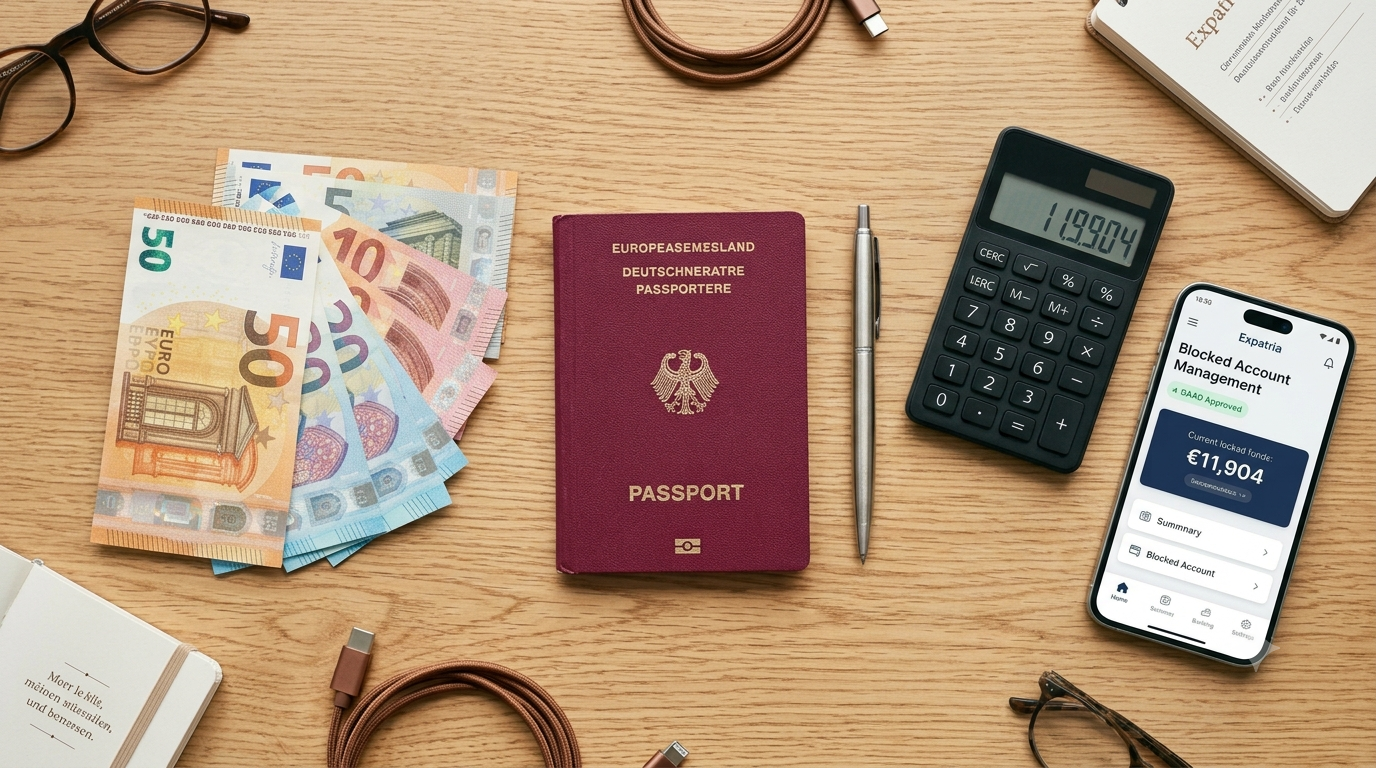
- Financial Proof for Visas: Non-EU/EEA applicants must demonstrate financial capability by funding a German blocked account (Sperrkonto) with at least €11,904 per year (€992 per month).
- Regional & Institutional Exemptions: Public institutions in Baden-Württemberg charge non-EU international students €1,500 per semester, while select universities (such as the Technical University of Munich) have introduced program-specific international tuition fees.
How the Free Tuition Model Works in Germany
The German public higher education system views tertiary education as a public good funded directly by state tax revenue rather than private student tuition.
Tuition Fees vs. Total Living Expenses
While public universities waive academic tuition fees, studying in Germany is not entirely cost-free. Students remain responsible for their personal living costs, mandatory health insurance, and semi-annual university administrative contributions.
| Cost Category | Estimated Amount (EUR) | Payment Frequency |
| Academic Tuition | €0 | Fully state-subsidized |
| Semester Contribution | €100 – €400 | Bi-annually (Per semester) |
| Mandatory Student Health Insurance | ~€120 – €150 | Monthly (Under age 30) |
| Living Costs (Rent, Food, Utilities) | €850 – €1,200 | Monthly (Location dependent) |
| Blocked Account (Visa Requirement) | €11,904 | Annual deposit requirement |
The mandatory semester contribution (Semesterbeitrag) covers university administrative overhead, student union services (Studierendenwerk), and often includes a Semesterticket providing unlimited local and regional public transportation.
Critical Exceptions to the Free-Tuition Policy
Before finalizing your university choices, evaluate the specific legal exceptions where tuition charges apply:
- State of Baden-Württemberg: Public universities in Baden-Württemberg (such as Heidelberg University, KIT, and University of Freiburg) charge non-EU international students €1,500 per semester.
- Technical University of Munich (TUM): TUM enforces program-specific tuition fees for newly enrolled third-country international students, generally ranging between €2,000 and €6,000 per semester.
- Non-Consecutive Degrees: Master’s programs that do not directly build on your previous undergraduate discipline, as well as executive postgraduate degrees (such as MBAs), carry individual tuition charges across all public institutions.
- Private Higher Education: Private institutions set their own fee structures, typically ranging between €5,000 and €20,000+ per year.
Top Tuition-Free Public Universities in Germany
Dozens of high-ranking public universities operate on a tuition-free model for foreign candidates. To explore official degree catalogs and verify individual program structures, consult the [External Link: Insert DAAD program database link with anchor text: official DAAD degree database].
Key public institutions operating under the standard tuition-free framework include:
- RWTH Aachen University: Internationally recognized for engineering, technology, and natural sciences.
- Humboldt University of Berlin: A historic research institution distinguished in humanities, social sciences, and law.
- Ludwig Maximilian University of Munich (LMU): One of Europe’s top-ranked comprehensive research institutions.
- Freie Universität Berlin: Renowned for political science, international relations, and humanities.
- University of Cologne: One of Germany’s largest traditional universities, specializing in economics, management, and social sciences.
- University of Bonn: Globally recognized for mathematics, economics, and life sciences.
If you are evaluating cost structures across different educational systems in Western Europe, review our complete breakdown of [Internal Link: Insert relevant internal URL here with anchor text: affordable university options in Europe for international students].

Standard Application Rules and Admission Requirements
Applying to a public university in Germany requires navigating specific academic criteria established by state educational authorities.
1. Higher Education Entrance Qualification (HZB)
Foreign secondary credentials must be recognized as equivalent to the German Abitur (Higher Education Entrance Qualification, or HZB).
- Direct Admission: If your secondary diploma qualifies as a direct HZB, you can apply directly to degree programs.
- Indirect Admission (Studienkolleg): If your diploma is not directly recognized, you must complete a one-year preparatory foundation course (Studienkolleg) in Germany and pass the final qualification exam (Feststellungsprüfung).
2. Language Proficiency Standards
- English-Taught Programs: Require certified proof via IELTS Academic (typically 6.5+) or TOEFL iBT (80+).
- German-Taught Programs: Require advanced proficiency via TestDaF (level 4 across all sub-tests), DSH-2, or Goethe-Zertifikat C1.
3. Document Verification (APS Certificate)
Applicants holding academic qualifications from India, China, or Vietnam must obtain an official APS Certificate (Akademische Prüfstelle) verifying document authenticity before submitting university or student visa applications.
Student Visa Rules: The Blocked Account (Sperrkonto)
To obtain a student visa, non-EU/EEA citizens must demonstrate financial self-sufficiency by opening a certified German Blocked Account (Sperrkonto).
       [Blocked Account Payout Framework]

  ┌──────────────────────────────────────────────┐
  │ Deposit Required Annual Living Funds         │
  │ Minimum Required: €11,904 for 1 year         │
  └──────────────────────┬───────────────────────┘
                         │
                         ▼
  ┌──────────────────────────────────────────────┐
  │ Visa Verification & Embassy Approval         │
  └──────────────────────┬───────────────────────┘
                         │
                         ▼
  ┌──────────────────────────────────────────────┐
  │ Monthly Release to Local German Bank Account │
  │ Capped Payout: €992 per month                │
  └──────────────────────────────────────────────┘
The standard annual deposit amount required by the German Federal Foreign Office is €11,904, which permits monthly withdrawals of up to €992 upon arrival in Germany to cover housing and living expenses.

Navigating Your Application Strategy
Securing a spot at a tuition-free university in Germany requires systematic preparation, early document verification, and careful budgeting for living expenses. By determining whether your diploma offers direct HZB recognition, meeting language requirements, and establishing your blocked account well in advance of application deadlines, you can successfully earn an accredited degree from a world-class German public university without incurring academic tuition debt.
Frequently Asked Questions (FAQs)
Is it completely free to study in Germany for free as an international student?
At most public universities in 15 federal states, academic tuition is entirely free for non-EU international students. However, you must pay a mandatory semester contribution of €100 to €400 bi-annually and cover your own living expenses.
Can international students work while studying at a public university in Germany?
Yes. Non-EU/EEA international students are legally allowed to work up to 140 full days or 280 half days per calendar year. Working as an academic student assistant (Werkstudent) on campus generally does not count toward this limit.
Do I need to speak fluent German to study in Germany for free?
No. German public universities offer hundreds of accredited Master’s programs and a growing number of Bachelor’s degrees taught entirely in English. You only need to demonstrate proficiency in the primary language of instruction of your chosen degree program.
What are the main application deadlines for German universities?
Most public universities operate on two major intake cycles:
- Winter Semester (starts October): Application deadlines are usually July 15.
- Summer Semester (starts April): Application deadlines are usually January 15.