


With global tuition costs soaring, international scholars are actively seeking high-value alternatives for their higher education. Germany stands out as a global powerhouse in higher education, offering world-class academic standards without the crushing weight of university debt.
If your goal is to study free in Germany, the opportunity is genuine and universally open to qualifying international applicants. While tuition fees are legally waived across public higher education systems, navigating admissions, mandatory university contributions, and living expense requirements requires a strategic step-by-step plan.
Key Takeaways
- Universal Free Tuition: Public universities across 15 of Germany’s 16 federal states offer tuition-free Bachelor’s and Master’s programs to domestic and international students alike.
- Mandatory Administrative Fees: Although tuition is free, students pay a nominal Semesterbeitrag (€100 to €450 twice a year) that covers administration, student services, and regional transit passes.
- Living Expense Proof (Sperrkonto): Non-EU applicants must prove financial self-sufficiency for visa approval by opening a German blocked account with a minimum of €11,904 per year (€992 per month).
- English-Taught Degree Options: Hundreds of public Master’s degrees and a growing selection of Bachelor’s programs are taught entirely in English.
- Legal Student Work Rights: Non-EU/EEA students can legally work up to 140 full days (or 280 half days) per calendar year to supplement living costs.
Why Germany Offers Free University Education
In 2014, German state governments abolished undergraduate tuition fees at all public universities. The philosophy behind this policy is rooted in the belief that higher education is a public good that drives innovation, enriches culture, and attracts top global talent.
When you decide to study free in Germany, you are benefiting from taxpayer-funded state institutions designed to provide equitable educational access.
[External Link: Official DAAD Search Portal for International Degree Programs]
Public vs. Private Institutions
It is crucial to apply to the correct category of university:
- Public Universities (Staatliche Hochschulen): Educate over 90% of students in Germany and charge zero tuition fees for almost all degree paths.
- Private Universities (Private Hochschulen): Charge independent tuition fees ranging from €5,000 to over €20,000 per year.

Top Public Universities Offering Free Tuition
If you want to study free in Germany, these globally respected public institutions offer tuition-free instruction across diverse fields:
- Ludwig Maximilians University of Munich (LMU Munich): Consistently ranked among Europe’s top universities, excelling in medicine, natural sciences, law, and business.
- Humboldt University of Berlin & Free University of Berlin: Capital-city hubs renowned for political science, arts, social sciences, and international research initiatives.
- RWTH Aachen University: Germany’s premier technical institute, highly sought after for engineering, computer science, and technology.
- University of Cologne: One of Germany’s oldest and largest public institutions, offering popular programs in economics, management, and human sciences.
- University of Göttingen: Famous for humanities, mathematics, and groundbreaking scientific research laboratories.
Important Regional Fee Exceptions
While the broad policy allows international scholars to study free in Germany, two notable exceptions apply:
- Baden-Württemberg State Fees: Public universities in this state (including Heidelberg, Freiburg, and Stuttgart) charge non-EU international students €1,500 per semester.
- Technical University of Munich (TUM): TUM introduced program-specific tuition fees for new incoming non-EU applicants, ranging from €2,000 to €6,000 per semester depending on the degree level.
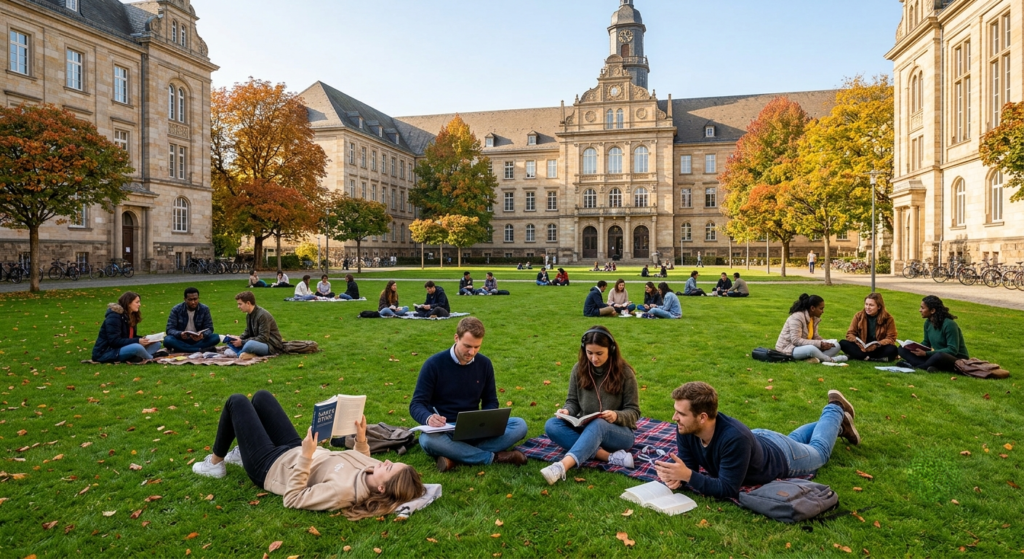
Real Costs: Living Expenses & Semester Contributions
“Tuition-free” does not mean completely zero-cost. To budget accurately, students must account for administrative and living expenses.
| Expense Category | Estimated Amount | Purpose / Frequency |
| Semester Contribution (Semesterbeitrag) | €100 – €450 | Paid twice annually; covers administrative costs, campus services, and public transport. |
| German Blocked Account (Sperrkonto) | €11,904/year | Minimum required balance deposited for non-EU student visa approval (€992/month). |
| Mandatory Health Insurance | ~€130 – €150/month | Public health coverage required for all enrolled university students under 30. |
| Housing & Accommodation | €350 – €750/month | Shared apartments (WG) or university dormitories. |
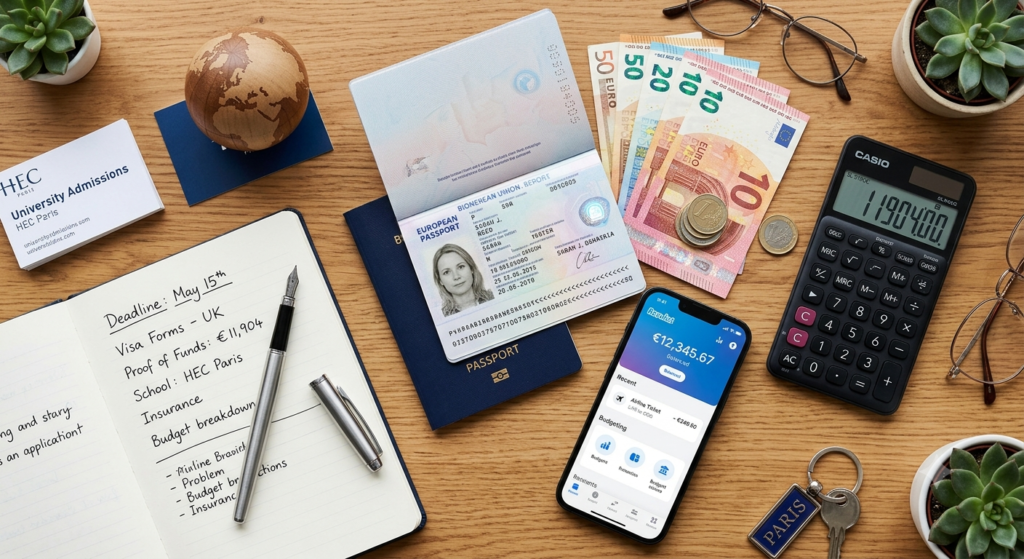
5 Actionable Steps to Apply to German Public Universities
To successfully plan your path to study free in Germany, follow this simplified admissions roadmap:
- Verify Academic Qualification (Hochschulzugangsberechtigung): Check if your high school diploma or Bachelor’s degree is directly recognized in Germany via the Anabin database or uni-assist portal.
- Select English or German-Taught Degree Programs: Obtain your required language proficiency certificates (IELTS/TOEFL for English courses or TestDaF/DSH for German courses).
- Submit Applications Early: Apply through the centralized uni-assist evaluation portal or directly on the university portal before standard deadlines (July 15 for Winter semester, January 15 for Summer semester).
- Open a Blocked Account: Deposit the required living funds into an approved provider like Expatrio or Fintiba to receive your official visa confirmation document.
- Apply for Your Student Visa: Present your university admission letter and financial proof at your local German embassy or consulate.
[Internal Link: Step-by-Step Guide to uni-assist Applications and Document Verification]
Frequently Asked Questions (FAQs)
Can non-EU international students really study free in Germany?
Yes. Public universities in 15 out of 16 German federal states charge no tuition fees to non-EU students for Bachelor’s and consecutive Master’s degrees. You only pay mandatory semester contributions and cover personal living expenses.
How much money do I need to prove for a German student visa?
Non-EU international applicants must deposit €11,904 into a German blocked account (Sperrkonto), which releases €992 per month to cover living expenses during your first year of study.
Is it possible to study free in Germany in English?
Yes. While most Bachelor’s degrees require German proficiency, German public universities offer hundreds of tuition-free Master’s degrees taught entirely in English, particularly in STEM, business, and social science disciplines.
Can I work while studying in Germany to cover my living expenses?
Yes. Non-EU international students are legally allowed to work up to 140 full days or 280 half days per calendar year, making part-time employment a practical way to support living costs.
kEarning an internationally recognized university degree does not have to result in long-term debt. By targeting tuition-free public universities, understanding regional exceptions, and preparing your blocked account early, you can successfully study free in Germany while gaining valuable European academic and professional experience.