


Germany stands out as one of the few top global destinations where foreign students can earn a recognized higher education degree without paying exorbitant tuition fees. Public universities across most German states offer tuition-free degree programs to both domestic and international applicants, making world-class academic training accessible regardless of personal financial background.
Understanding how to study in Germany for free requires managing university admission requirements, document evaluations, and national visa protocols. While state subsidies cover tuition costs, candidates must meet specific academic standards and demonstrate financial self-sufficiency for their living expenses during their stay.
Key Takeaways
- Zero Tuition at Public Universities: Public higher education institutions in 15 out of 16 German federal states charge no tuition fees for Bachelor’s and Master’s programs, regardless of student nationality.
- Mandatory Semester Fee (Semesterbeitrag): Enrolled students pay a non-tuition contribution (€100–€450 per term) that covers administrative costs, student unions, and local public transit passes.
- Proof of Financial Means (Sperrkonto): Non-EU/EEA visa applicants must open a German blocked account funded with €11,904 per year (€992 per month) to meet student visa requirements.
- Centralized Document Verification: Foreign academic credentials must often be evaluated via uni-assist or verified for equivalence through the official Anabin database.
- Student Working Rights: Non-EU international students can work up to 140 full days (or 280 half days) per calendar year to earn supplementary income.
Navigating Public Universities in Germany
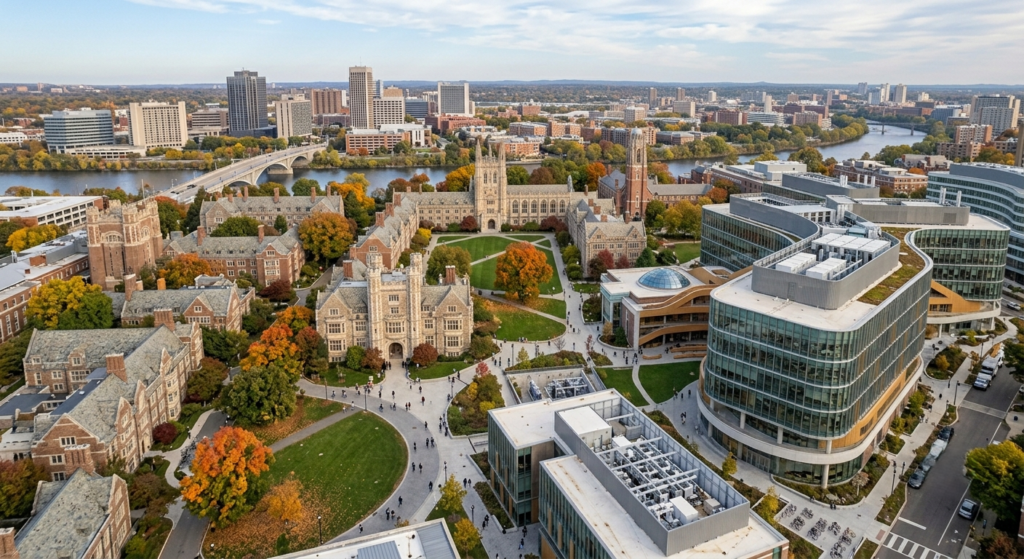
The German higher education landscape is primarily state-funded, ensuring high research standards and equal educational access.
- Public Universities (Staatliche Hochschulen): Over 90% of university students in Germany attend public institutions where tuition is completely waived across standard degree programs.
- Private Universities (Private Hochschulen): Independent institutions that charge tuition fees ranging between €5,000 and €20,000 per year.
[External Link: Official DAAD International University & Program Finder]
Step-by-Step University Application Process
Learning how to study in Germany for free involves navigating clear administrative deadlines and credential verification rules.
1. Verify Academic Equivalence (HZB)
International secondary school diplomas or prior degrees must qualify as a Higher Education Entrance Qualification (Hochschulzugangsberechtigung or HZB).
- Direct Admission: Your high school leaving certificate matches German Abitur standards, allowing direct university enrollment.
- Indirect Admission: If your qualification is not fully recognized, you must attend a one-year preparatory course (Studienkolleg) and pass the Feststellungsprüfung (FSP) assessment test.
2. Prepare Language Proficiency Certificates
- German-Taught Degrees: Require standardized certificates such as TestDaF or DSH-2.
- English-Taught Degrees: Require official scores from exams like IELTS Academic (6.5+) or TOEFL iBT (80+).
3. Submit Applications via uni-assist or Direct Portals
Many German public institutions route international document evaluations through uni-assist, while others use their direct online admissions portals.
- Winter Semester Deadline: Typically July 15.
- Summer Semester Deadline: Typically January 15.

German Student Visa & Financial Proof
Securing a German student visa requires non-EU citizens to present proof of adequate financial resources to cover cost-of-living expenses.
| Cost Category | Estimated Amount | Key Details |
| Blocked Account (Sperrkonto) | €11,904 / year (€992/month) | Mandatory deposit for visa issuance; releases €992 monthly upon arrival. |
| Semester Contribution | €100 – €450 / semester | Covers university admin fees and regional transit passes. |
| Health Insurance | ~€130 – €150 / month | Statutory public health insurance required for students under 30. |
| Accommodation & Living | €400 – €800 / month | Costs vary by region; shared apartments (WGs) offer affordable living. |
[Internal Link: Detailed Guide on Opening a German Blocked Account]

Frequently Asked Questions (FAQs)
Can non-EU citizens learn how to study in Germany for free?
Yes. Non-EU international students can attend public universities tuition-free in 15 of Germany’s 16 federal states. You only need to pay the recurring semester contribution and cover your personal living expenses.
What is the blocked account requirement for a German student visa?
Visa applicants must open a German blocked account (Sperrkonto) containing at least €11,904 for a 12-month visa. The account disburses €992 each month to cover living costs.
Are there tuition fees in Baden-Württemberg or at TUM?
Public universities in Baden-Württemberg charge non-EU international students €1,500 per semester. Additionally, the Technical University of Munich (TUM) charges variable tuition fees for select degree programs for non-EU students.
Can I work while studying in Germany?
Yes. International students from non-EU/EEA countries are legally permitted to work up to 140 full days or 280 half days per calendar year without affecting their student visa status.
Conclusion
Knowing how to study in Germany for free opens up top-tier academic and professional opportunities without accumulating massive tuition debt. By confirming your entrance qualifications (HZB), preparing your language certificates, and depositing your living funds into a recognized blocked account, you can smoothly transition into Germany’s world-class public university system.